Automatic excommunication, historical precedent, and the limits of ecclesial communion
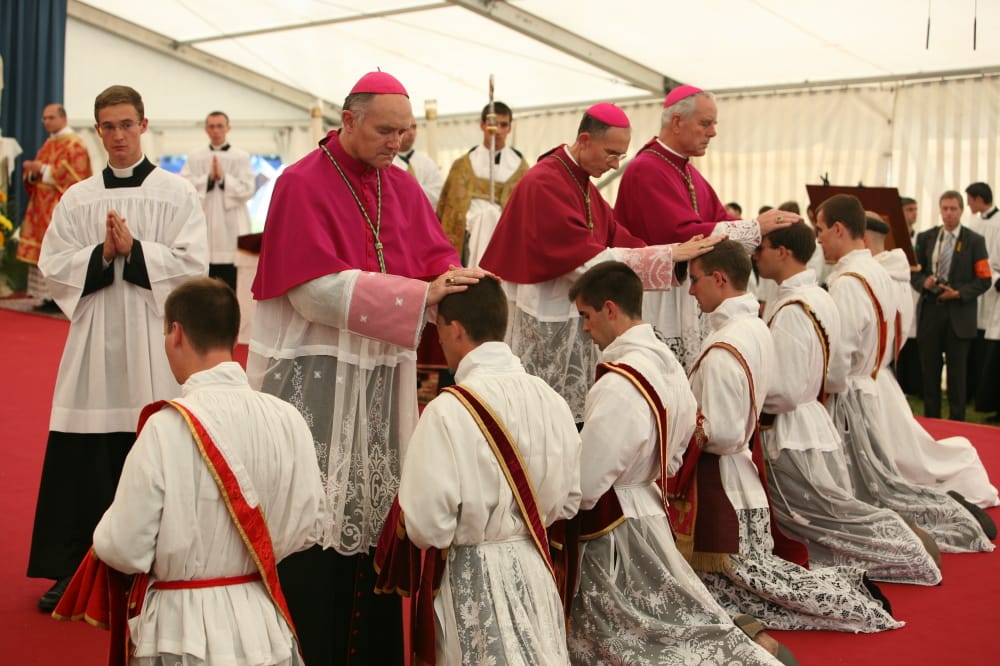
The announcement that the Society of Saint Pius X (SSPX) plans to proceed with new episcopal consecrations on July 1 has revived an old but never-settled question: if a community consecrates bishops without papal mandate, does it incur excommunication?
The honest answer cannot be reduced to a simple “yes” or “no.”
The issue must be examined through three overlapping layers: the 1988 historical precedent, the lifting of excommunications in 2009, and the current canonical and pastoral status of the SSPX under Pope Francis.
A crucial point—often misunderstood—must be stated clearly from the outset: the illicit consecration of bishops without papal mandate incurs automatic (latae sententiae) excommunication, meaning the penalty is incurred by the act itself, not only after a formal declaration by the Holy See.
The 1988 rupture
On June 30, 1988, Archbishop Marcel Lefebvre consecrated four SSPX priests as bishops without authorization from the Holy See. According to canon law, both the consecrating bishop and the newly consecrated bishops automatically incurred latae sententiae excommunication at the very moment the act was performed.
The following day, the Congregation for Bishops publicly confirmed that the canonical penalty had taken effect. Shortly afterward, Pope John Paul II affirmed this judgment in his apostolic letter Ecclesia Dei (July 2, 1988), describing the act as illicit and of a schismatic character.
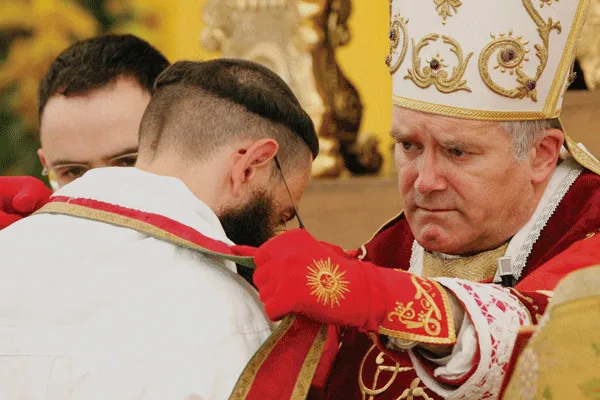
What must be emphasized is this: the Church did not “impose” excommunication after the fact. Rather, it recognized and declared a penalty that had already arisen by law.
The underlying issue was not merely disciplinary disobedience. In Catholic ecclesiology, a bishop is not simply a sacramental office-holder, but a visible sign of communion—communion with the Pope and with the entire College of Bishops. By “creating” bishops outside papal mandate, the act was understood as a practical denial of that communion, thus triggering the Church’s most severe canonical sanction.
2009: lifting the excommunication does not mean legalization
In 2009, under Pope Benedict XVI, the Congregation for Bishops issued a decree lifting the latae sententiae excommunications of the four bishops consecrated in 1988.
However, Pope Benedict immediately clarified a decisive point: the lifting of the excommunication addressed a disciplinary penalty, not the SSPX’s unresolved doctrinal and ecclesiological status. As a result, the SSPX still lacked any canonical status in the Church and was not recognized as a legitimate ecclesial structure.
This distinction is directly relevant to today’s question. Lifting an excommunication removes a penalty already incurred; it does not authorize similar actions in the future. It reopens the door to dialogue and heals a disciplinary wound, but it does not grant the SSPX the authority to maintain or expand an independent episcopal hierarchy apart from Rome.
Under Pope Francis: pastoral openings, but a firm episcopal boundary
The pontificate of Pope Francis has often been characterized by a strong pastoral emphasis. The Holy See has sought to ease the consciences of the faithful attached to the SSPX, particularly regarding sacraments directly affecting moral and family life.
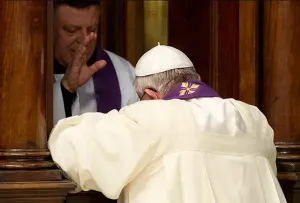
In 2016, Pope Francis granted—without a fixed end date—the faculty for SSPX priests to validly hear confessions. In 2017, the Vatican issued guidelines allowing, under certain conditions, a canonical pathway for marriages involving the SSPX, in order to ensure pastoral certainty for the faithful.
These measures, however, must be interpreted correctly. They are selective pastoral solutions, designed to protect the faithful—not a comprehensive canonical normalization. No concession has ever touched the core issue of episcopal consecrations.
The reason is straightforward. Pastoral provisions can address the validity and liceity of sacraments at the level of individual believers. The creation of bishops, however, affects the very architecture of ecclesial communion, since bishops are inserted into a visible and juridical bond with the Pope and the universal episcopate.
The SSPX today: not schismatic, but canonically “irregular”
Based on official Vatican documents and consistent formulations, the SSPX’s current situation can be summarized in three points:
- It is not considered to be in formal schism, especially after the lifting of excommunications in 2009.
- It has no canonical status in the Church and is not recognized as a legitimate ecclesial structure.
- It enjoys limited pastoral concessions, but not full legalization.
In short, the Vatican is maintaining a delicate balance: keeping the door to communion open, while refusing to hand over the “keys” of episcopal authority.
If the SSPX consecrates bishops again: is excommunication automatic?
This point must be addressed clearly and decisively.
From the perspective of canon law
Under current canon law, the consecration of a bishop without papal mandate constitutes a grave offense and incurs latae sententiae excommunication. This means:
- The penalty arises at the moment the act is committed
- No prior declaration from the Holy See is required
- Any subsequent declaration merely confirms and publicizes the penalty; it does not create it
In other words, there is no “Francis-era exception” for illicit episcopal consecrations.
From the Vatican’s likely response
Unlike in 1988, today’s context includes dialogue and efforts to reduce open conflict. The Holy See may choose a different communicative or diplomatic approach. None of that, however, alters the canonical reality: the automatic excommunication would still be incurred.
A test for both sides
According to The Catholic Herald, the SSPX plans to consecrate new bishops on July 1, with its own bishops performing the rite, while discussions with the Dicastery for the Doctrine of the Faith over episcopal succession appear stalled.
If this occurs, it would represent not merely an internal decision, but a serious test:
- For the SSPX: will it choose a “survival strategy” by securing its own episcopal continuity, or accept prolonged irregularity in hope of restored communion?
- For the Vatican: how can it uphold the principle of episcopal communion without provoking a public rupture that would cause pastoral harm?
Automatic excommunication and the core issue of communion
From the events of 1988, the lifting of excommunications in 2009, and the pastoral approach under Pope Francis, one conclusion emerges clearly:
- The SSPX incurred automatic excommunication through the illicit consecrations of 1988.
- That penalty was lifted in 2009, without granting canonical status or the right to consecrate bishops.
- Under Pope Francis, pastoral doors have been opened, but the episcopal boundary remains firmly in place.
Therefore, if the SSPX were to consecrate bishops today without papal mandate, it would again incur latae sententiae excommunication—a severe blow to already fragile efforts toward communion.
Ultimately, the issue is not merely a technical provision of canon law, but a fundamental ecclesiological question: who has the authority to guarantee the communion of the episcopate in the Catholic Church? At this point, every attempt at “self-governance” reaches a boundary the Church cannot cross.
Author

Chuyên viết tin tức và bài phân tích về Giáo hội Công giáo và các vấn đề tôn giáo – xã hội quốc tế.