The controversy surrounding whether the Society of Saint Pius X (SSPX) may or may not consecrate bishops without papal mandate goes far beyond a technical question of canon law. It touches the very identity of the Church, the meaning of communion, and the limits of acting in the name of “pastoral conscience.” What is unfolding today is not merely a replay of 1988, but a deeper question: How far can the Church go in healing divisions without undermining the very structure that makes her the Church?
Latae sententiae excommunication: not a “punishment,” but the consequence of a choice
First, one foundational point cannot be avoided: the consecration of a bishop without a mandate from the Pope incurs latae sententiae excommunication, meaning the excommunication is automatic and takes effect at the moment the act is committed. It is not a penalty later imposed by the Vatican; it is an intrinsic juridical and ecclesiological consequence of the act itself.
Catholic theology understands the episcopate not merely as a sacramental function, but as the visible principle and foundation of ecclesial communion. When a group establishes bishops outside papal mandate, it does more than violate a legal norm—it creates a parallel center of communion. In this sense, excommunication is not primarily punitive; it recognizes a rupture that has already occurred.
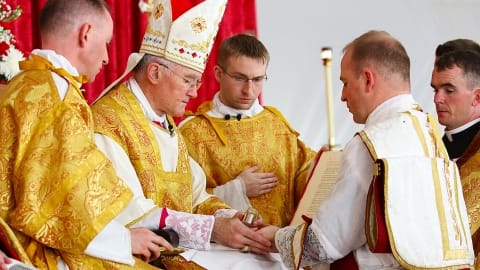
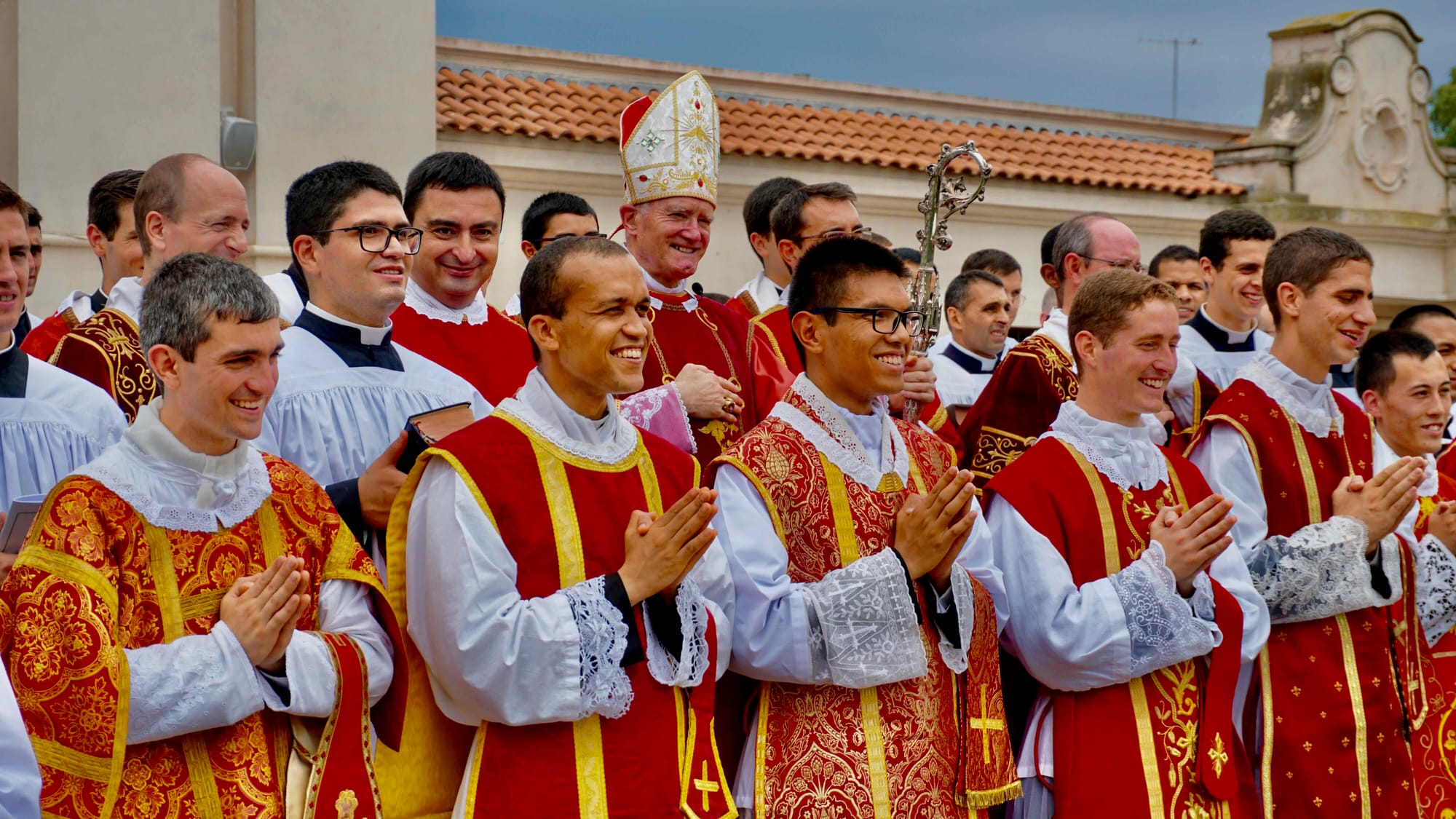
This is precisely what happened in 1988, when Archbishop Marcel Lefebvre consecrated bishops for SSPX. And when Pope Benedict XVI lifted the excommunications in 2009, that act removed a disciplinary sanction—it did not alter the principle, nor did it retroactively legitimize the act.
Lifting a penalty is not granting permission; pastoral mercy is not juridical legalization
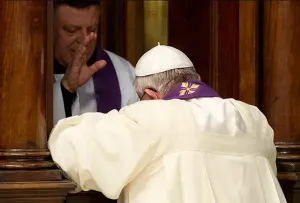
A persistent misunderstanding arises when pastoral mercy is confused with canonical authorization. Under Pope Francis, the Holy See has indeed taken significant pastoral steps regarding SSPX: granting its priests the faculty to hear confessions validly and opening a juridical pathway to ensure the validity of marriages celebrated with SSPX involvement under certain conditions. These measures reflect the Church’s supreme pastoral principle: salus animarum suprema lex—the salvation of souls is the highest law.
Yet precisely because these are pastoral provisions, they are carefully delimited. No document—under Pope Francis or any previous pope—has authorized SSPX to consecrate bishops. The reason is not rigidity, but ecclesiology. Bishops belong to the structural level of the Church, not merely the functional one. Pastoral care can adapt to circumstances; communion cannot be replaced by expediency.
The China comparison: similar in form, radically different in substance
Supporters of SSPX often point to China: the Chinese state consecrated bishops without papal mandate, yet later the Holy See recognized several of them. Why, they ask, can China be “regularized” while SSPX cannot?
The answer lies in the moral and ecclesiological nature of the situations. In China, the Church has existed under systematic political coercion by an atheistic state. Many bishops were consecrated without papal mandate not by a free ecclesial choice, but under conditions of pressure, isolation, or lack of communication with Rome. In many cases, these bishops never rejected papal primacy in conscience.
When the Holy See later recognized such bishops, it did so as an act of retroactive healing, aimed at restoring unity in a Church wounded by external violence. This recognition did not validate the principle of illicit consecrations; it repaired the consequences of coercion.
SSPX operates in a fundamentally different context. It functions in free societies, enjoys direct access to Rome, and appeals to an internal theological rationale—a claimed “state of necessity”—to justify bypassing ordinary ecclesial structures. This is not coercion from outside; it is a conscious internal decision. For that reason, the Chinese precedent cannot serve as a normative comparison.
“The Vatican does not respond clearly”: silence is not permission
SSPX frequently argues that Rome has not given a clear or decisive answer to its requests. But canonically speaking, there is no such thing as permission by silence when it comes to episcopal consecration. The law is already explicit; Vatican silence creates no legal vacuum.
In the Holy See’s tradition, such silence often functions as a soft but firm boundary: dialogue remains possible, but the proposed course of action is not acceptable. The same argument—“Rome did not respond adequately”—was made in 1988, with well-known consequences.
What is ultimately at stake?
The SSPX question is not merely about one fraternity. It raises a fundamental ecclesiological issue: Can a group within the Church establish its own episcopal structure on the basis of conscience and pastoral urgency? If the answer were yes, then every deep disagreement could eventually justify a parallel hierarchy. Communion would cease to be objective and would become optional.
This is why the Church—patient, dialogical, and merciful—cannot yield on this point. Not to protect power, but to safeguard her sacramental and communal identity.
SSPX, China, Vatican silence, pastoral mercy—all these elements can only be understood within a theology of communion. The Church can heal wounds caused by coercion and injustice. But she cannot legitimize a rupture freely chosen, even when it is defended in the name of pastoral concern.
In the end, the real question is not whether SSPX incurs excommunication, but this: What would the Church become if communion were no longer a non-negotiable boundary?
Author

Chuyên viết tin tức và bài phân tích về Giáo hội Công giáo và các vấn đề tôn giáo – xã hội quốc tế.