It is no coincidence that when we speak of Iran and Israel, we envision a present marked by turbulence, conflict, hatred, and deep ideological divides. To the casual observer, the relationship between these two nations seems straightforward: Iran, a state firmly opposed to Israel’s existence; and Israel, a nation living under the constant shadow of threat. Yet beneath the surface of this modern hostility lies a profound spiritual question: Are Iran and Israel truly eternal enemies, or could they be unwitting allies in a greater divine plan stretching back to the dawn of history?
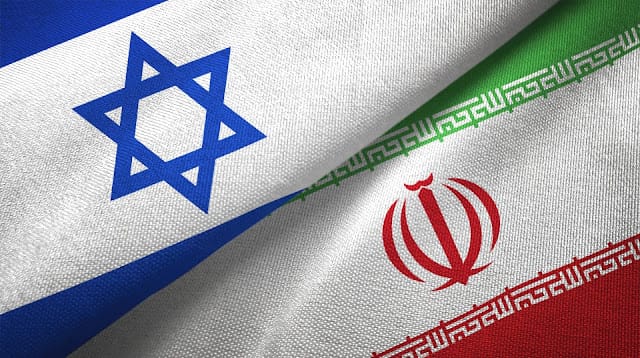
The story of these two nations—once connected by ancient history and now divided by modern politics—invites us to look beyond the noise of political rhetoric and nuclear threats, and to consider the mysterious workings of a plan beyond human control.
A Shared Ancient Past
Long before the Islamic Republic of Iran and the State of Israel existed, there were Persia and Israel, bound together in one of the most extraordinary moments of biblical history. Cyrus the Great, the Persian king, is remembered in the Hebrew Scriptures as God’s “anointed”—a pagan ruler chosen to free the Jewish people from their exile in Babylon. His decree allowed the Jews to return to Jerusalem, rebuild their Temple, and renew their covenant with God.
At that time, the relationship between Israel and Persia symbolized freedom, hope, and a shared purpose under the guidance of the Almighty.
How then did the land that once produced Cyrus—hero in Jewish memory—become home to a regime calling for Israel’s destruction? Could this seemingly irreconcilable hostility be part of a larger story whose ending has yet to be written?
Ideological Conflict: A Battlefield of Divine Will?
Today, Iran and Israel represent more than two opposing states; they embody broader worldviews that transcend borders. Israel stands as the reborn Jewish homeland after centuries of exile, a symbol of hope for Jews worldwide. For many believers, its modern restoration fulfills ancient prophecy and affirms that God has not forgotten His covenant with Israel.
Iran, particularly since the 1979 Islamic Revolution, portrays itself as the defender of Shi’a Islam, determined to resist Western dominance and what it sees as the unjust occupation of Palestinian lands. In Iran’s narrative, Israel is not merely a political adversary but a cosmic opponent—linked to a world awaiting the coming of the Mahdi, the Islamic savior who will establish justice and peace.
Thus, the two nations are not only locked in political rivalry; they are drawn into a spiritual struggle, each convinced it stands on the right side of history and divine favor.
But what if these rivals are, in fact, participants in the same divine drama—playing opposing roles in a script far greater than human understanding?
The Prophetic Dimension: The Shadow of Gog and Magog
For centuries, scholars of the Abrahamic faiths have studied ancient prophecies, seeking to understand how historical upheavals fit into God’s eternal design. The Book of Ezekiel speaks of a climactic battle in the “last days”—the war of Gog and Magog. In this vision, Persia (modern-day Iran) is named among the nations that will rise against Israel in an apocalyptic confrontation.
Yet this is no ordinary war. In Ezekiel’s account, God Himself intervenes, revealing His sovereignty to the nations. Could escalating tensions between Iran and Israel be not merely tragic inevitabilities but integral elements of a divine narrative? Are provocations, threats, and clashes only political events—or signs pointing toward the fulfillment of ancient prophecy?
Christians often connect this vision with the Book of Revelation, where forces of good and evil clash in a final battle. Many Evangelical believers see the modern State of Israel as central to this unfolding drama, and Iran’s hostility as part of the prophetic opposition preceding ultimate redemption. In Islam, both Sunni and Shi’a traditions await the Mahdi, who will bring justice and end earthly conflicts—perhaps even resolving longstanding enmities among nations.
Enemies by Design, Allies in Destiny?
What if the bitter conflict between Iran and Israel is not merely a mark of division but a divine paradox? What if their hostility serves as a crucible forging a greater destiny?
In the Hebrew Scriptures, a recurring theme emerges: God often works through conflict and chaos to accomplish His ultimate purposes. Israel’s trials—exiles, wars, and suffering—have been refining fires preparing the nation for a future it could not yet see. Likewise, God has raised nations, sometimes against Israel, to serve His designs—whether as instruments of correction or partners in redemption.
Could it be that, in God’s infinite wisdom, Iran and Israel are unwitting allies, their confrontation part of a strategy neither fully understands? Might their opposition serve a higher purpose that will only become clear when the curtain of history is finally lifted?
The Mystery of God’s Plan
Scripture reminds us that God’s ways are not human ways (Isaiah 55:8). Amid the storms of history, as nations rise and fall, we glimpse only fragments of a far greater picture. Iran and Israel—now sworn enemies—may one day be seen as standing on the same side of a story authored by God Himself.
Perhaps when the fires of hostility are extinguished and prophecies fulfilled, the world will look back on this era not merely as tragedy but as a necessary passage through which both nations were shaped and drawn closer to their destined roles in a sacred design.
Until then, the world can only watch and wait, as the divine symphony continues to unfold.
Author

Chuyên viết tin tức và bài phân tích về Giáo hội Công giáo và các vấn đề tôn giáo – xã hội quốc tế.